Popular Searches
Large rugs | Oversized rugs | Floral rugs | Allover rugs | Medallion layouts | Shop by color | Rug size guide
Quick Navigation
Key Takeaways
- Ziegler Sultanabad rugs are loved for open drawing and soft color relationships that feel elevated but easy to live with.
- They frequently appear in room-size and oversized formats, making them strong foundations for living rooms, dining rooms, and open plans.
- When shopping, prioritize balanced palette, honest condition, stable edges, and a design density that fits how you want the room to feel.
At-a-Glance Specs
- Origin/Region: Persia (Sultanabad / Arak area)
- Typical era: Late 19th Century through early 20th Century (piece-dependent)
- Construction: hand-knotted pile rugs (often wool pile on cotton foundation)
- Design language: open florals • large-scale vines • airy allovers • framed borders
- Palette tendency: softened earth tones • muted reds/terracottas • gentle blues/greens • warm neutrals
- Best rooms: living rooms • dining rooms • bedrooms • libraries • open-plan spaces
- What to look for: crisp but relaxed drawing • harmonious contrast • stable edges • even wear for your use case
Featured Ziegler Rugs from the Collection
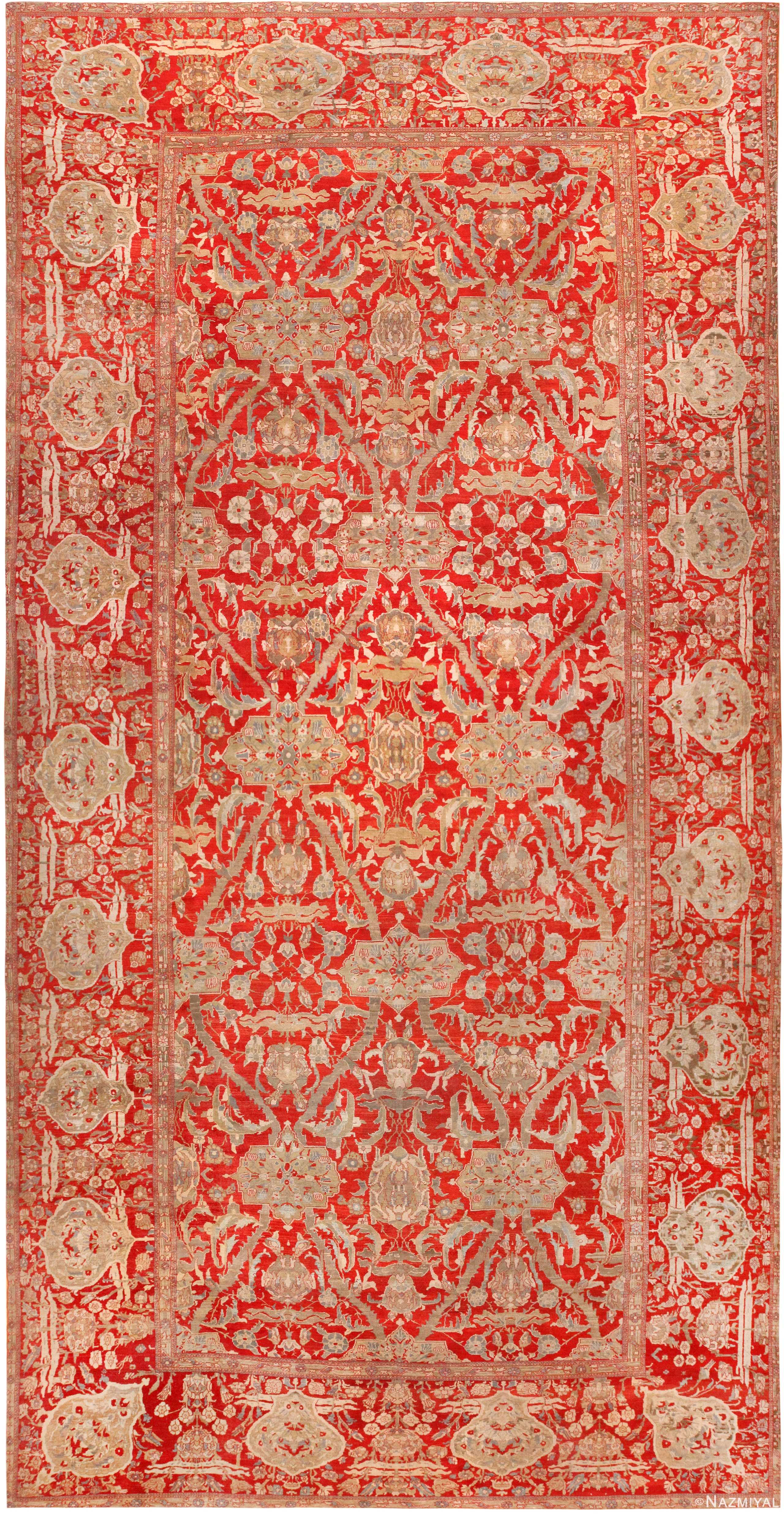
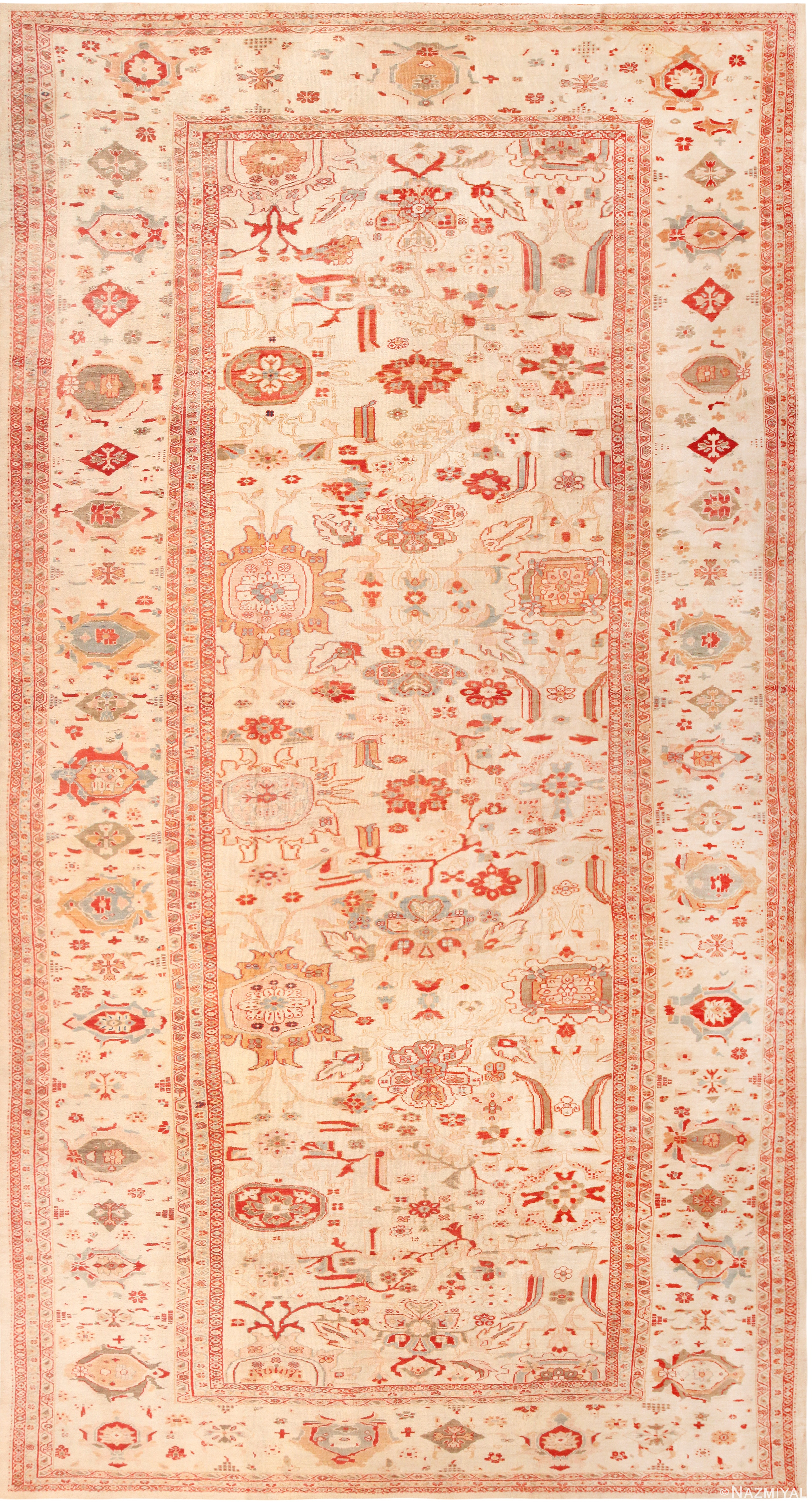
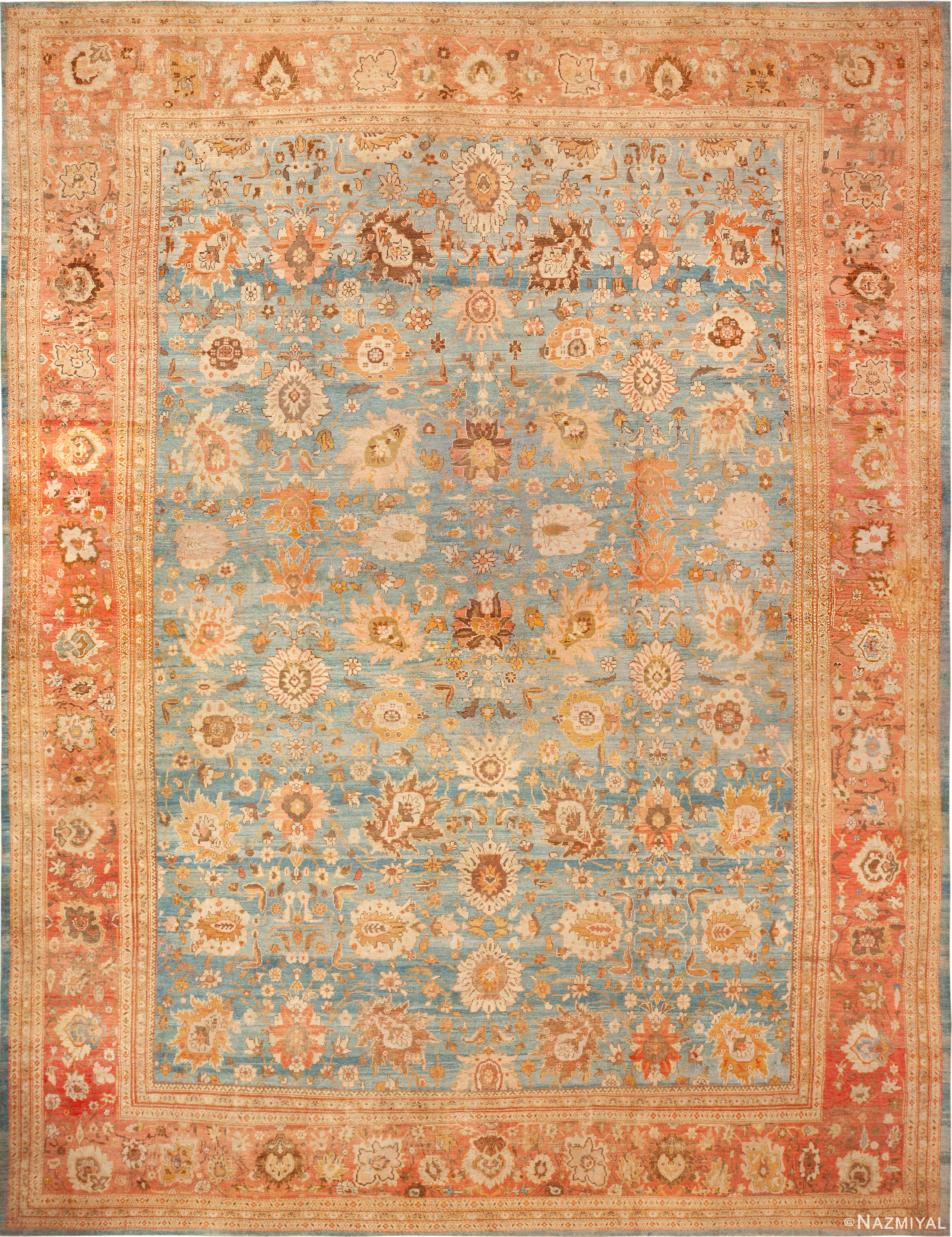
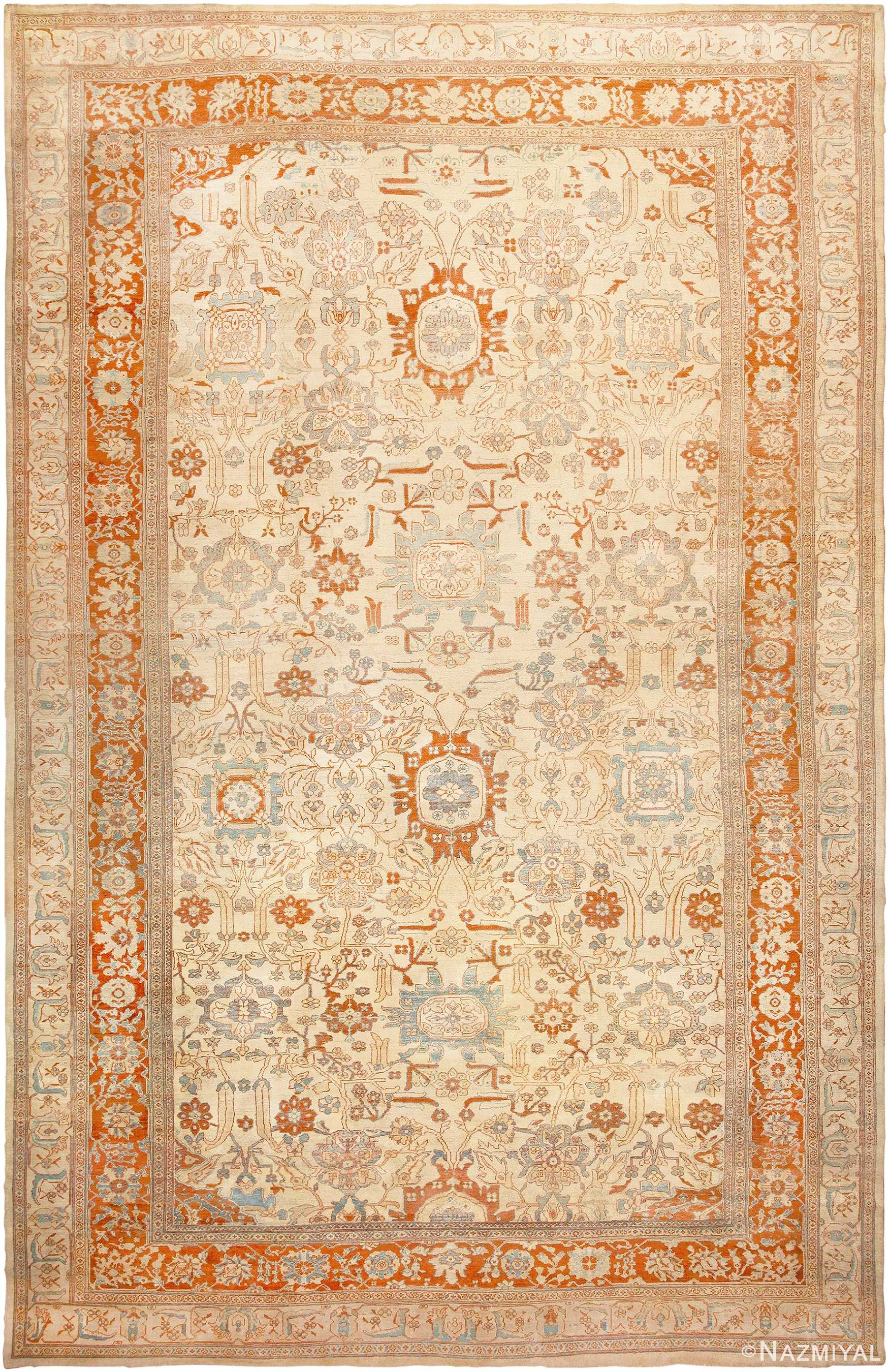
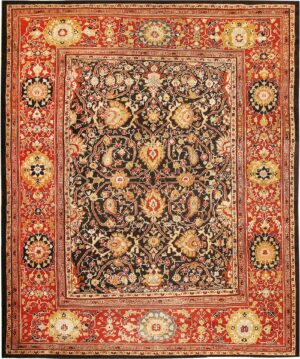
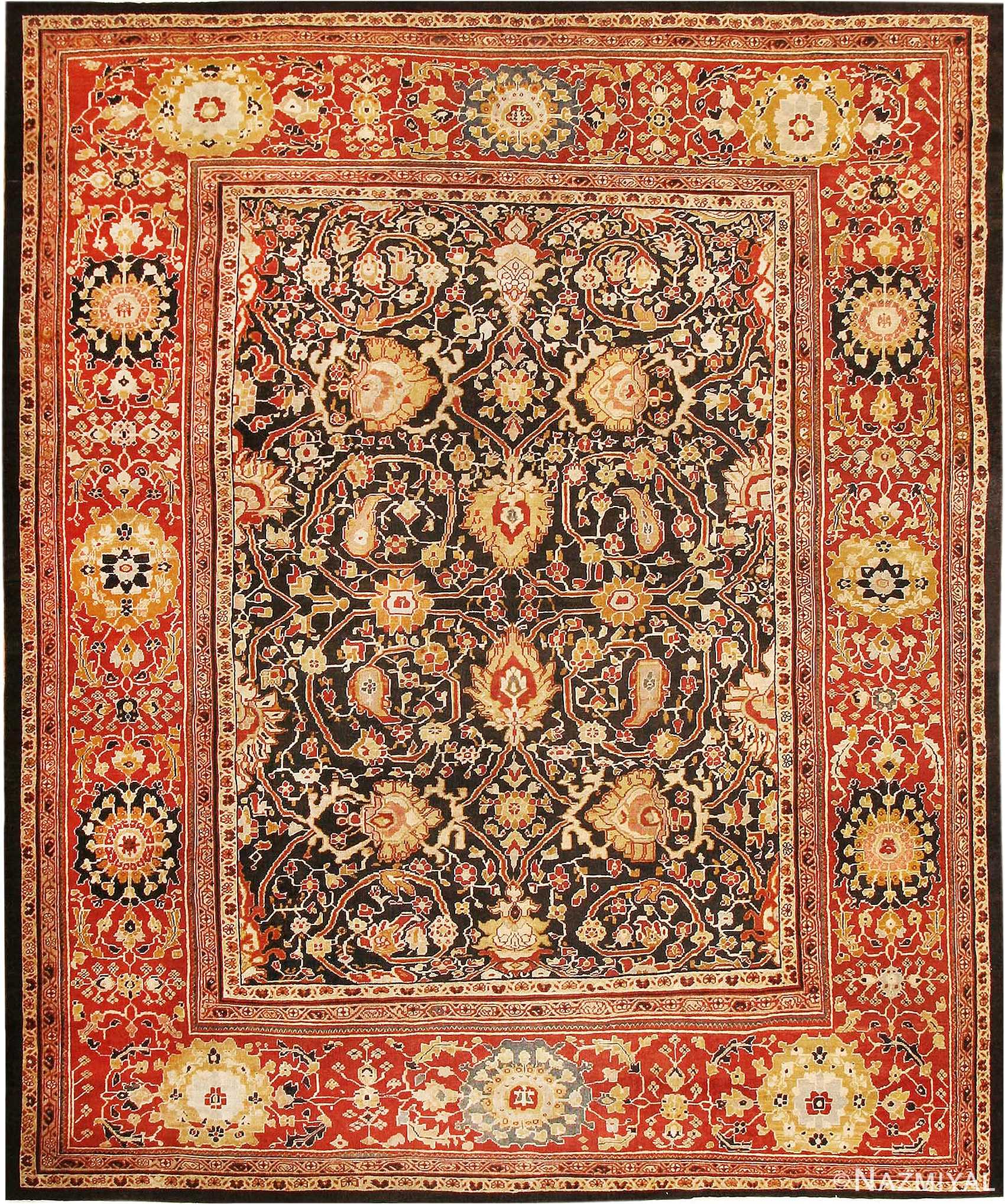
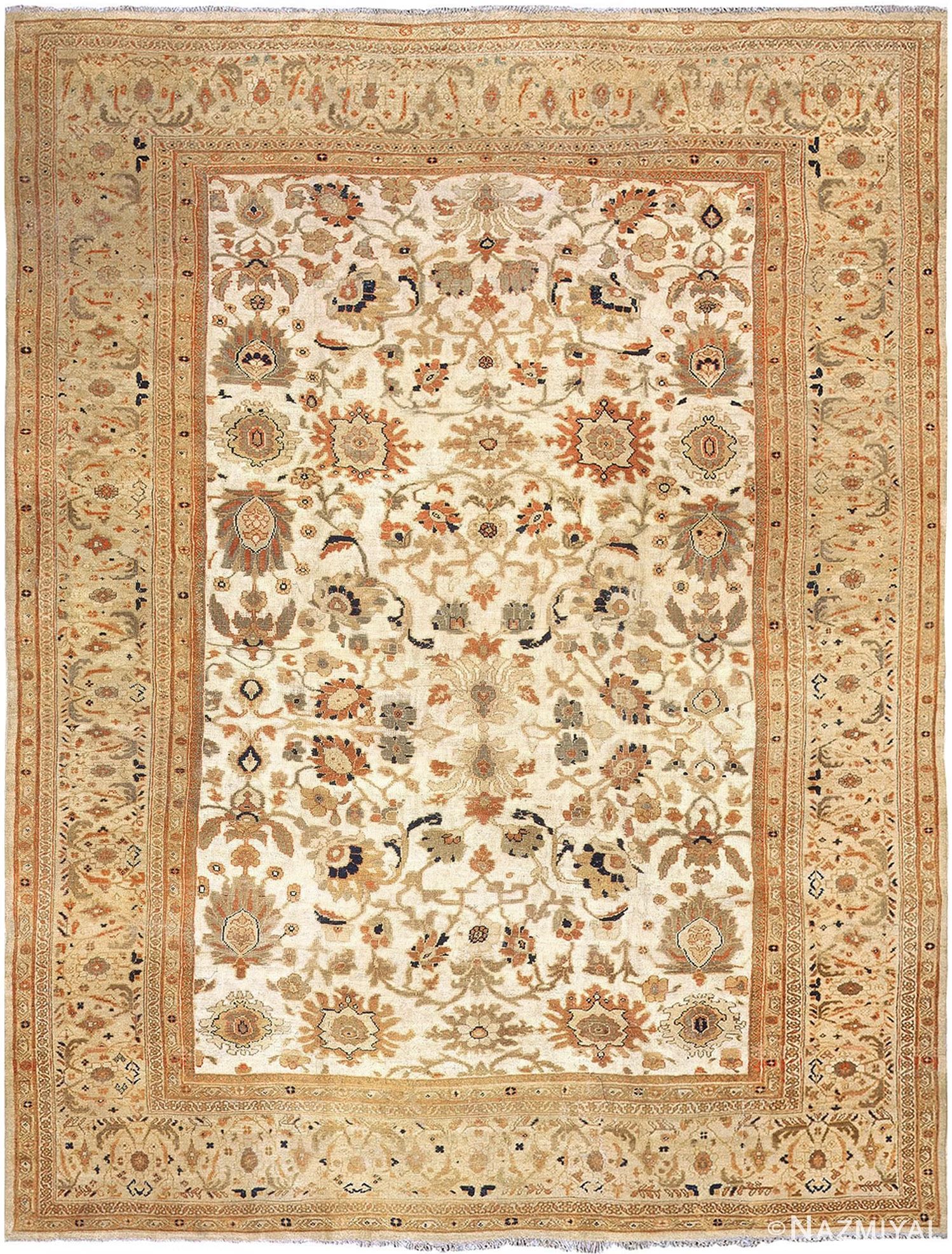
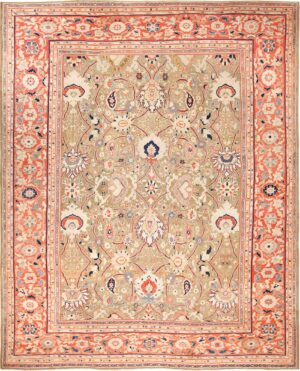
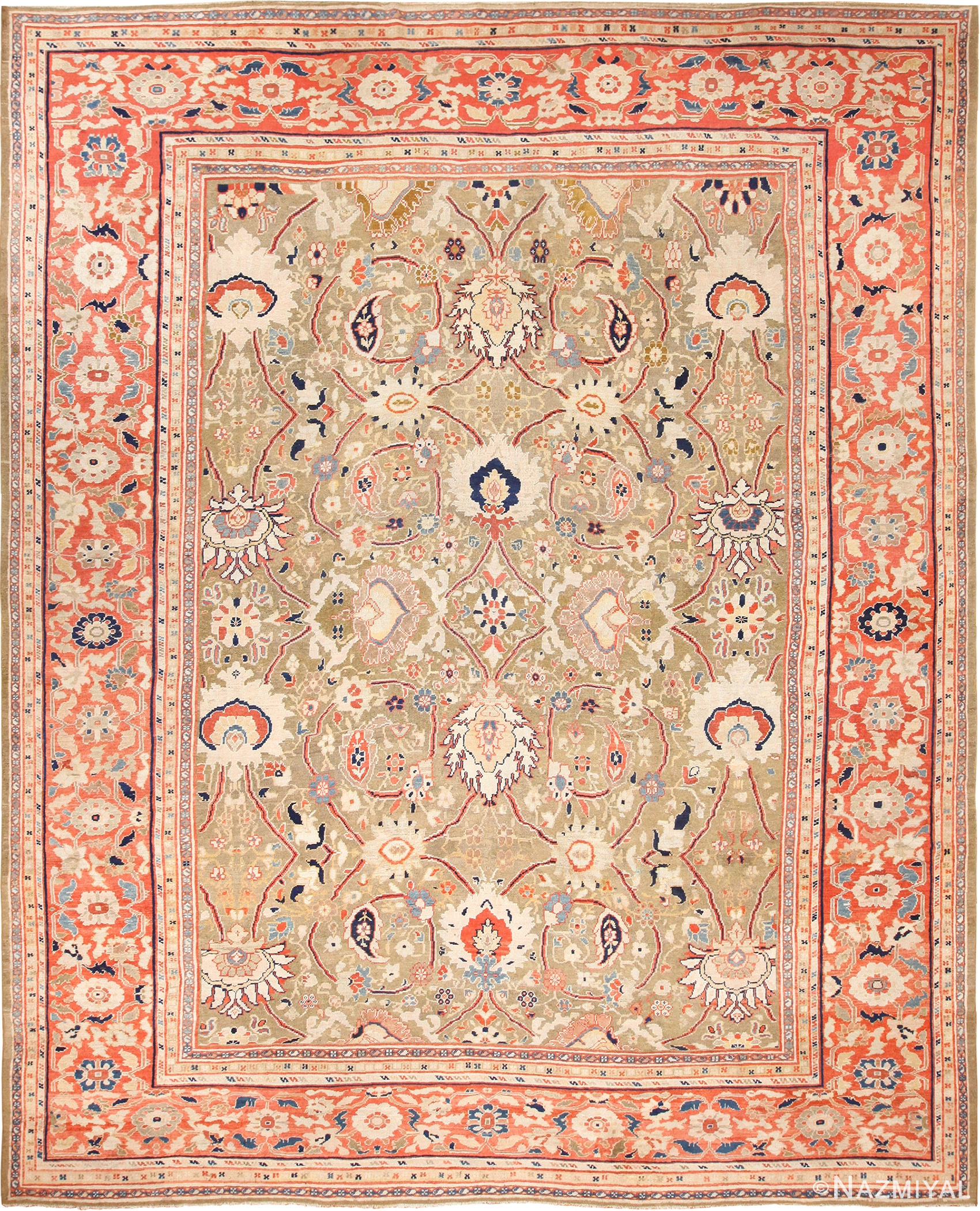
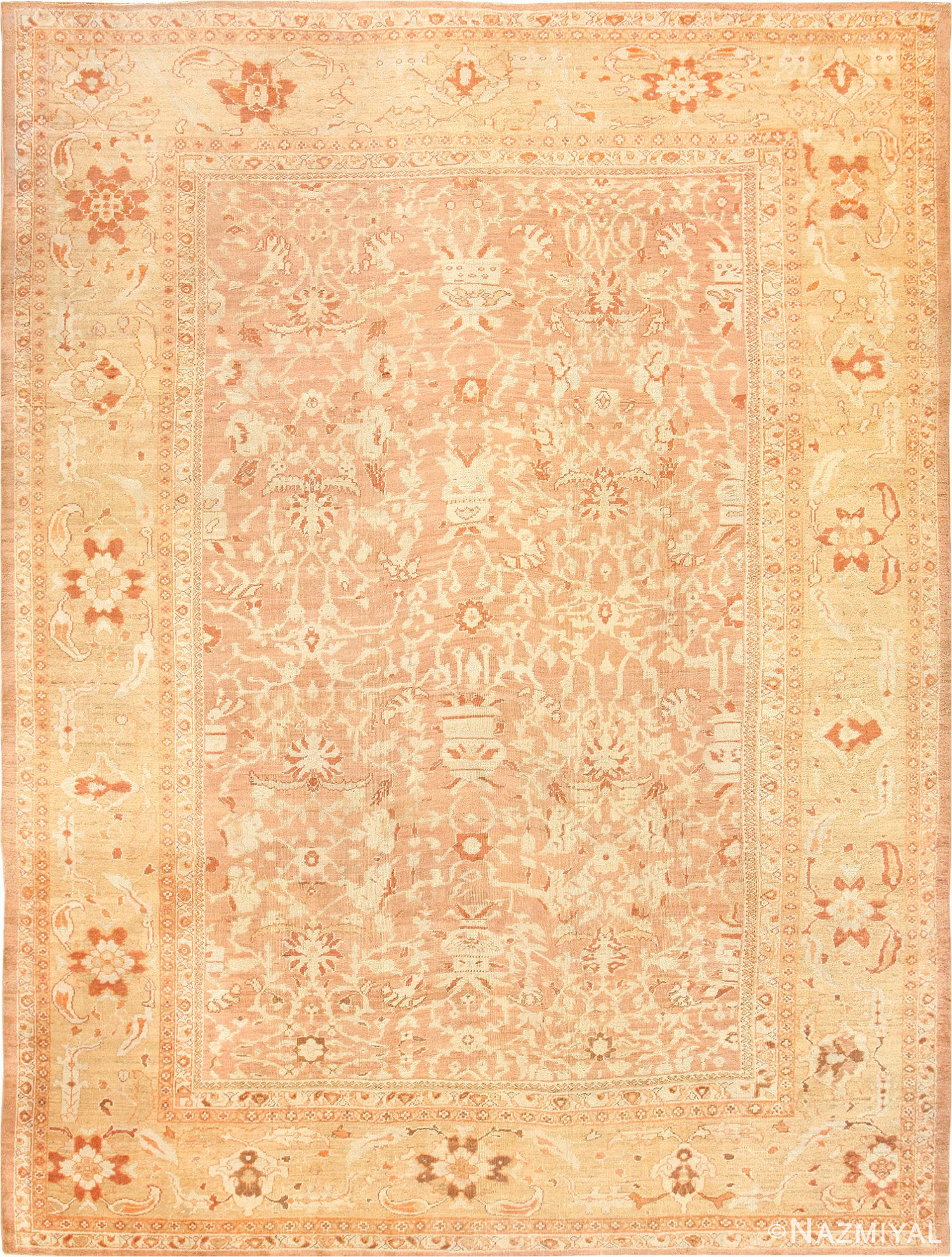
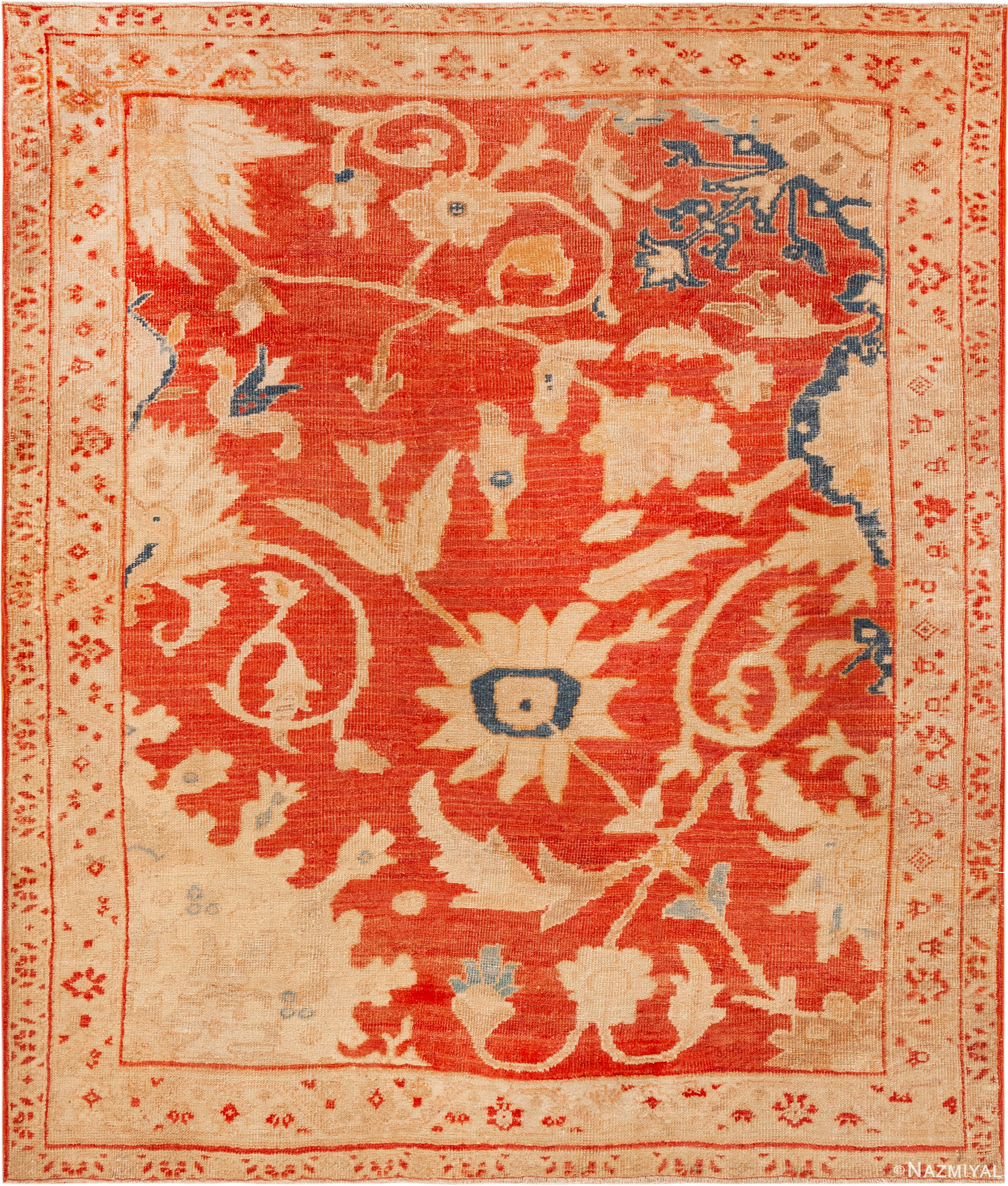
Inventory changes frequently. These featured rugs are live examples of the Ziegler Sultanabad aesthetic across scale, palette, and layout.
History & Design Notes
Ziegler Sultanabad rugs emerged from a moment when Western interiors increasingly valued softer palettes and clearer, more breathable compositions. Many examples retain the logic collectors recognize from classical Persian carpet structure—borders, field organization, and floral vocabularies—while presenting those elements with a calmer “read” across the room. The result is a category that feels both antique and remarkably adaptable in modern homes.
If you want to compare these rugs to their broader weaving family and regional context, start with Sultanabad rugs and explore the wider universe of Persian rugs.
Identification & Construction
How to recognize the “Ziegler look”
A classic Ziegler Sultanabad composition tends to feature larger-scale florals and vines with more negative space than many densely patterned workshop rugs. Borders often feel elegant and framing rather than heavy, and the palette typically leans toward softened, decorator-friendly tones that coordinate with wood, stone, and neutral walls.
Materials, structure, and livability
Most Ziegler Sultanabad rugs are wool-forward, chosen for durability and a comfortable, resilient hand. When evaluating a piece, check edge stability, corners, and overall wear consistency—especially if the rug will live in a dining room or a high-traffic main space. For additional regional and weaving-family context, explore rug origins.
Decorating & Placement Guidance
Let the rug set the “temperature” of the room
Ziegler Sultanabad rugs are excellent at establishing warmth without overpowering the space. Pair them with quieter wall tones and natural materials (oak, walnut, linen, stone) so the rug reads as the foundation—rich, not busy. In large rooms, their open drawing helps keep the space cohesive and composed.
Repeat the palette, but keep the room breathable
Echo one or two rug colors elsewhere (a single textile, artwork, or an upholstery accent) rather than matching everything. This preserves the rug’s role as the anchor and avoids a “too matched” look. If you want more contrast, introduce one cool accent (ink blue, charcoal, or deep green) to sharpen the composition.
Choose an era that matches how you live
For an unmistakably collected feel, start with an antique rug that carries time-earned character and subtle variation. If you prefer a more relaxed, day-to-day blend with mixed furnishings, explore vintage rugs. For cleaner fields and fewer competing motifs, consider modern rugs inspired by classic proportions.
Ziegler Rugs vs Mahal Rugs
Ziegler Sultanabad rugs are often compared to Mahal rugs because both categories share a regional and design-family relationship. If you want the closest practical comparison, explore Persian Mahal rugs.
| Feature | Ziegler Sultanabad Rugs | Mahal Rugs |
|---|
| Overall “read” | Airier drawing, calmer palette, decorator-friendly spacing | Often bolder presence, robust village character, stronger contrast |
| Common motifs | Large florals, open vines, framed borders, soft allovers | Floral systems with more density, village abstractions, hearty repeats |
| Best for | Transitional interiors, open plans, calm foundations | Collected traditional rooms, stronger pattern moments, warm layered decor |
| Shopping focus | Palette harmony, openness, border balance, edge stability | Condition honesty, character, drawing vitality, foundation stability |
Closest Cousin
- Sultanabad rugs — the primary family context for Ziegler production and design language.
Closest Rugs to Compare
- Persian Mahal rugs — a closely related category with a more robust village-forward character.
- Oushak rugs — a classic alternative when you want spacious drawing and softly composed color.
Glossary
Sultanabad: A Persian weaving region (Arak area) associated with large room-size carpets and decorator-friendly compositions.
Mahal: A related Persian village-weaving family often compared with Ziegler/Sultanabad production.
Allover pattern: A repeating design that fills the field without a single dominant center.
Border system: The framing elements (main border + guard borders) that organize a rug’s field.
For more definitions, see the rug glossary.
FAQ
What is a Ziegler rug?
A Ziegler rug typically refers to an antique Persian carpet associated with Sultanabad-area weaving, valued for open drawing, large-scale florals, and softened palettes designed to complement Western interiors.
Are Ziegler Sultanabad rugs Persian?
Yes. These rugs are associated with Persian weaving traditions and are commonly linked with Sultanabad (Arak) regional production.
Why do Ziegler rugs look “softer” in color?
Many examples were developed with calmer, more blended palettes that read elegantly in rooms—especially alongside neutral walls, natural woods, and layered textiles.
How do Ziegler rugs compare to Mahal rugs?
Ziegler rugs often present a lighter, airier design density, while Mahal rugs can feel more robust and village-forward. Both can be excellent foundations—the best choice depends on how bold you want the room to feel.
Where do Ziegler rugs work best?
They shine in living rooms, dining rooms, and bedrooms—anywhere you want a refined foundation with pattern presence that remains easy to decorate around.
Three Pillars of the Nazmiyal Collection
- Unmatched inventory depth: A broad, curated selection across antique, vintage, and modern rugs—so you can compare the right pieces side by side.
- Rigorous authenticity standards: A collector-first approach to attribution, quality, and condition—backed by documentation support when appropriate.
- Expert advisory: Guidance on size, palette, placement, and period so the rug fits your space as beautifully as it fits your taste.
Nazmiyal White-Glove Service
We make it easy to shop with confidence—whether you’re choosing a single statement piece or curating a full room.
Nazmiyal Collection has been a trusted source for antique rugs and vintage carpets for over 45 years. Our NYC gallery curates one-of-a-kind pieces with an emphasis on authenticity, provenance, and lasting decorative value.
Need help? Call us at (212) 545-8029 or visit our New York City showroom to work with a rug expert.

 Size: 14 ft x 26 ft (4.27 m x 7.92 m)
 Size: 17 ft 4 in x 23 ft 9 in (5.28 m x 7.24 m)
 Size: 14 ft 5 in x 22 ft 3 in (4.39 m x 6.78 m)
 Size: 13 ft 7 in x 16 ft 7 in (4.14 m x 5.05 m)
 Size: 12 ft 9 in x 16 ft 7 in (3.89 m x 5.05 m)
 Size: 13 ft 3 in x 16 ft 3 in (4.04 m x 4.95 m)
 Size: 11 ft x 15 ft (3.35 m x 4.57 m)
 Size: 4 ft 9 in x 5 ft 7 in (1.45 m x 1.7 m)